
PinnedWell is reader-supported. When you buy through links on our site, we may earn an affiliate commission at no extra cost to you. This helps us keep creating honest, research-backed content.
I'll be honest: I was a yoga studio snob. I thought practicing at home was for people who didn't take yoga seriously. The ambient lighting, the instructor adjustments, the collective energy of a room full of people breathing together — how could a living room compete with that?
Then my favorite studio closed, and I started practicing at home out of necessity. Three years later, I practice at home by choice. But the transition taught me something important: when you don't have a studio environment doing the heavy lifting, your equipment matters a lot more. Specifically, your mat.
A bad mat at a studio is tolerable. A bad mat at home — where you're already fighting distractions and motivation issues — will end your practice.
What Makes a Good Home Practice Mat Different
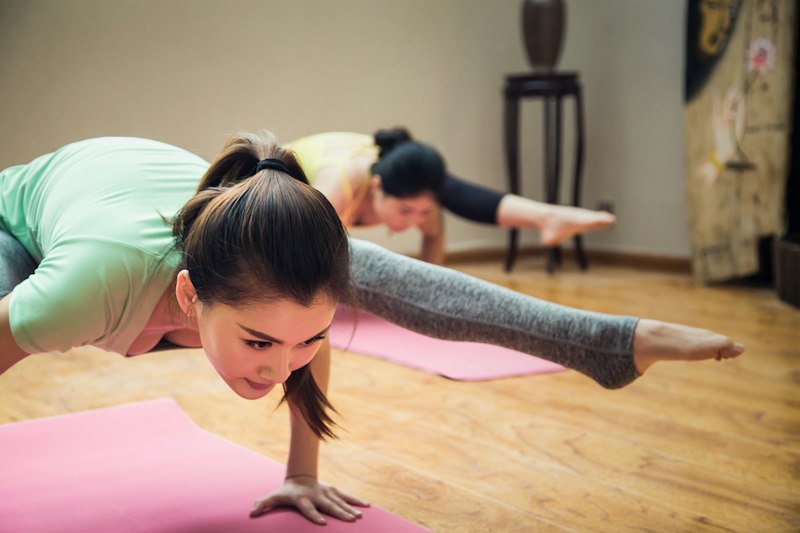
Studio mats and home practice mats have different priorities. At a studio, you roll your mat up, carry it, unroll it, and roll it back up every class. Weight and portability matter. At home, your mat lives on the floor (or leaned against a wall). It doesn't need to be light or portable. It needs to be:
- Thick enough to cushion your knees on hard floors (most homes have hardwood or tile, not sprung studio floors)
- Grippy when dry (you won't always be warmed up enough to sweat, especially for morning sessions)
- Large enough that you're not constantly adjusting position
- Durable enough to stay out permanently without degrading
The Manduka PRO: The Buy-It-For-Life Mat
The Manduka PRO is 6mm thick, made from dense closed-cell PVC, and comes with a lifetime guarantee. It's heavy (7.5 lbs) and you'd never want to carry it to a studio. But for home practice? It's perfect. The thickness cushions joints on any floor surface, the density means it won't compress and bottom out over time, and the closed-cell construction means it never absorbs sweat or odor.
Fair warning: the Manduka PRO has a break-in period. Out of the box, the surface is slightly slippery. After 2-3 weeks of regular practice (or a salt scrub to speed things up), it develops excellent grip. Be patient with it.
The Liforme: Best Grip, Period
If grip is your top priority — maybe you practice a lot of standing balances or you have naturally dry hands — the Liforme Yoga Mat is unmatched. The proprietary "GripForMe" surface is sticky even when dry, and it gets grippier as your hands warm up. No slipping in downward dog, no adjusting your feet in warrior poses.
The Liforme also has alignment markers etched into the surface, which is genuinely useful for home practice where you don't have an instructor checking your positioning. It's thinner than the Manduka (4.2mm) but the natural rubber base provides surprisingly good cushioning.
What We Like
Room to Improve
The JadeYoga Harmony: Best Eco-Friendly Option
The JadeYoga Harmony is made from natural rubber tapped from rubber trees — no PVC, no EVA, no synthetic foams. Jade plants a tree for every mat sold, and the manufacturing is done in the US. If sustainability matters to you, this is the mat.
Performance-wise, it's excellent. Natural rubber is inherently grippy, the 3/16 inch thickness provides solid cushioning, and it feels noticeably different under your hands and feet than synthetic mats — more organic, more connected to the floor.
The trade-off is durability. Natural rubber breaks down faster than PVC, especially if exposed to sunlight or stored in heat. Keep it out of direct sun and it'll last 2-3 years of daily practice.
Quick Comparison
| Mat | Thickness | Weight | Grip | Price | Best For |
|---|---|---|---|---|---|
| Manduka PRO | 6mm | 7.5 lbs | Good (after break-in) | $120 | Longevity and joint support |
| Liforme | 4.2mm | 5.5 lbs | Excellent | $150 | Grip and alignment |
| JadeYoga Harmony | 4.7mm | 4.5 lbs | Very Good | $80 | Eco-conscious practitioners |
Frequently Asked Questions
Do I need a mat if I have carpet? Yes. Carpet is unstable — it compresses under pressure, making balance poses harder and providing inconsistent feedback. A firm mat on carpet gives you a stable, defined practice surface.
How thick should my mat be for hardwood floors? At least 5mm if you do a lot of kneeling or floor work. The Manduka PRO at 6mm is ideal. If you go thinner, consider keeping a folded blanket nearby for extra knee padding.
How do I clean a yoga mat? Mix equal parts water and white vinegar in a spray bottle, spritz the mat after practice, and wipe with a damp cloth. Deep clean monthly by wiping the whole surface down. Avoid submerging natural rubber mats in water.
Is an expensive mat really worth it? If you practice 3+ times per week, absolutely. A $120 mat that lasts a lifetime costs less per use than a $30 mat you replace every year. More importantly, a mat you enjoy practicing on removes one more barrier between you and your practice.
Your home practice space doesn't need to be perfect. It needs a good mat, enough room to extend your arms, and a door you can close. Start with the mat — it's the foundation everything else is built on.
Related Articles

Laundry Room Makeover on a Budget: From Depressing Dungeon to a Room I Don't Hate
You don't need a full renovation to transform your laundry room. These budget-friendly upgrades took my sad, cluttered laundry corner from eyesore to a space I actually enjoy being in — for under $200 total.

How to Create an Aesthetic Home Office in Any Corner of Your House (Mom Edition)
You don't need a spare room to have a beautiful home office. Here's how to create an aesthetic, functional workspace in any corner of your house — even if that corner is also the dining room and the homework station.