
PinnedWell is reader-supported. When you buy through links on our site, we may earn an affiliate commission at no extra cost to you. This helps us keep creating honest, research-backed content.
Our primary bedroom is 10 feet by 11 feet. That's 110 square feet, which sounds like a reasonable number until you put a queen bed in there. Then add two nightstands, a dresser, and the door that swings inward because of course it does. What you're left with is a walking path approximately 14 inches wide, a constant sense of claustrophobia, and the nagging feeling that you're sleeping in a walk-in closet.
We can't move walls. We can't knock out a window. We can't afford a bigger house. So I spent three months figuring out how to make the room we have feel like a room we'd want to be in.
The result? Same room, same furniture footprint, but it feels noticeably more open and calm. Visitors have actually asked if we expanded it. We didn't. We just got smarter about how we use the space.
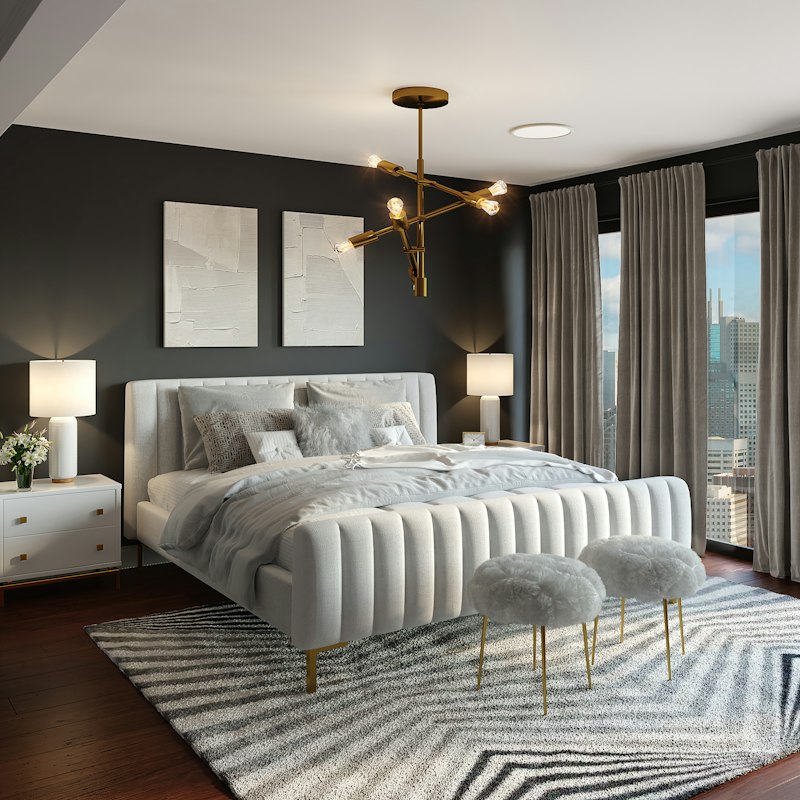
1. Float Your Bed (Or at Least Fake It)
When your bed is shoved into a corner, the room feels like a dorm. Even if you only have 8 inches of space between the bed and each side wall, pulling the bed away from the corner and centering it on the main wall makes the room feel more open and intentional.
I gained the space by switching from traditional nightstands to wall-mounted floating shelves. These are the single biggest space-saver in a small bedroom. They provide the same surface area for a lamp, phone, and water glass without eating any floor space.
Mounted at mattress height, they function exactly like nightstands but the visual openness underneath makes the room breathe.
2. Use One Large Mirror
This is the oldest trick in the design book and it works every single time. A large mirror reflects light and depth, visually doubling the space it faces. In a small bedroom, one well-placed mirror can completely change the feel.
Where to put it: Lean a full-length arched mirror against the wall opposite or adjacent to the window. It'll reflect natural light across the room during the day and lamplight at night. Avoid placing it directly facing the bed if it bothers you — the wall beside the closet or beside the door works great.
The Antok Arched Floor Mirror leans perfectly against a wall without mounting, which is ideal if you're renting or don't want to drill into studs.
3. Go Light on the Walls
Dark walls in a small bedroom can feel dramatic and cozy — or they can feel like a cave. If your bedroom gets limited natural light (like ours, with one north-facing window), light walls are your friend.
The ideal small-bedroom wall color is a warm white or very light warm neutral — not stark white, which feels sterile, but something with a hint of cream or warmth. Benjamin Moore "White Dove" and Sherwin-Williams "Alabaster" are the two I see designers recommend most for small bedrooms.
If you're renting and can't paint, light-colored bedding and curtains have a similar effect. A white duvet cover with cream pillows makes the bed (the largest visual element in the room) feel like it's expanding the space rather than consuming it.
4. Floor-to-Ceiling Curtains
This trick is almost magical. Hanging curtains from the ceiling (or as close as you can get) instead of just above the window frame makes the room feel taller. Your eye follows the curtain up, assumes the window is taller than it is, and reads the room as having more vertical space.
The formula: Mount your curtain rod 2-4 inches below the ceiling. Let the curtains just barely touch the floor — no pooling, no hovering 6 inches up. The continuous line from ceiling to floor elongates the wall.
Use light, airy curtain panels — white or cream linen or semi-sheer fabric. Heavy, dark drapes will make the room feel smaller.
5. Under-Bed Storage Instead of a Dresser
If your small bedroom has a closet with even a basic organizer, you might be able to eliminate the dresser entirely. A dresser takes up 3-4 square feet of floor space plus the visual bulk of a large piece of furniture. Move folded items into under-bed storage and reclaim that space.
The Lifewit Under Bed Storage Bags are rigid enough to slide in and out easily and hold a surprising amount. I fit all of my husband's t-shirts, sweatpants, and workout clothes into two bags under our bed. We sold the dresser. The room immediately felt twice as open.
6. One Overhead Light Is Not Enough (But It's Not the Right Kind)
A single overhead fixture casts flat, even light that makes every wall and surface equally visible — which makes the room feel like a box. Small rooms benefit from multiple light sources at different heights to create depth.
My small bedroom lighting setup:
- Wall-mounted sconces instead of table lamps (saves nightstand space). Plug-in sconces don't require an electrician — they mount with screws and plug into an outlet.
- One warm floor lamp or accent lamp in the corner for ambient glow
- No overhead light at all after 7 PM — I switched the fixture to a warm 2200K bulb and only use it when getting dressed
The sconces throw light upward and downward simultaneously, which makes the walls feel taller and adds warm pools of light that create an illusion of depth.
7. Edit Your Nightstand
A cluttered nightstand in a small room is a magnifying glass for chaos. Every item on it is inches from your face while you sleep. Keep only the essentials:
- A lamp (or sconce-mounted, freeing the surface entirely)
- A water glass or small carafe
- One book
- Phone charger (discreet, routed behind the shelf)
That's it. Move the lotion, the lip balm, the three books you're "currently" reading, and the random receipts somewhere else. A clear nightstand surface makes the whole room feel cleaner.
8. Swap Your Bulky Bed Frame
If your bed frame has a massive headboard and chunky side rails, it's eating visual space. Slim, low-profile bed frames make the bed look like it takes up less room even though the mattress is the same size.
Look for frames with slender metal or wood legs — the visible floor underneath the bed creates a floating effect that makes the room feel more open.
9. Use the Back of the Door
The back of your bedroom door is prime real estate that almost everyone ignores. An over-the-door hook rack holds bathrobes, tomorrow's outfit, bags, and accessories without taking up any wall or floor space.
10. Keep the Floor Clear
The more floor you can see, the bigger the room feels. This means:
- No shoes scattered on the floor (use a slim shoe rack inside the closet)
- No piles of clothes (laundry hamper inside the closet or behind the door)
- No random boxes or bags
The visual expanse of uninterrupted floor tricks your brain into reading more square footage than exists.
11. Choose One Focal Point
In a large bedroom, you can have multiple visual moments — art gallery, statement headboard, reading nook. In a small bedroom, pick one thing to be the star and let everything else be quiet.
For us, it's the bed itself — white bedding, two textured accent pillows, and one throw at the foot. The walls are light, the nightstands are minimal, and the mirror reflects the bed as the main event. Your eye has one place to land, and the room feels calm rather than crowded.
The Quick-Reference Cheat Sheet
| Trick | Cost | Impact |
|---|---|---|
| Floating shelves as nightstands | $17 | High |
| Arched floor mirror | $43 | High |
| Floor-to-ceiling sheer curtains | $18 | Medium |
| Under-bed storage (remove dresser) | $20 | Very High |
| Plug-in wall sconces | $35 | Medium |
| Warm white bulbs | $8 | Medium |
| Declutter nightstands | Free | Medium |
| Clear the floor | Free | High |
| Total | ~$141 |
Frequently Asked Questions
Does a smaller bed actually help? Dropping from a queen to a full saves about 6 inches of width. In a very tight room, that 6 inches can mean the difference between fitting two nightstands and fitting zero. But if you sleep with a partner, a full-size bed is a tight squeeze. Optimize everything else before downsizing the bed.
Should I skip a rug in a small bedroom? No — a rug under the bed actually helps. It anchors the bed and adds warmth. Just make sure the rug extends at least 18 inches beyond the sides and foot of the bed. A too-small rug makes the room look smaller.
What about wall art in a small bedroom? One medium-to-large piece above the bed, or nothing. A bunch of small frames on a small wall creates visual noise. One impactful piece gives the eye somewhere to rest.
A small bedroom doesn't have to feel small. It just needs smart choices — fewer pieces, lighter colors, strategic mirrors, and thoughtful lighting. The goal isn't to fool anyone into thinking your room is bigger than it is. It's to make the room you have feel open, calm, and like a place you genuinely want to spend time.
Related Articles

The Best Baby Monitors in 2026 (A Sleep-Deprived Mom's Definitive Ranking)
After testing five popular baby monitors over three years and two kids, here is my honest ranking based on picture quality, reliability, and whether they actually let you sleep. No sponsorships, just opinions from the trenches.

The 2026 Baby Registry Must-Haves That Actually Get Used (From a Second-Time Mom)
Skip the cute-but-useless stuff and register for the baby products that will actually save your sanity. A second-time mom breaks down the registry items she used daily versus the ones that collected dust.